
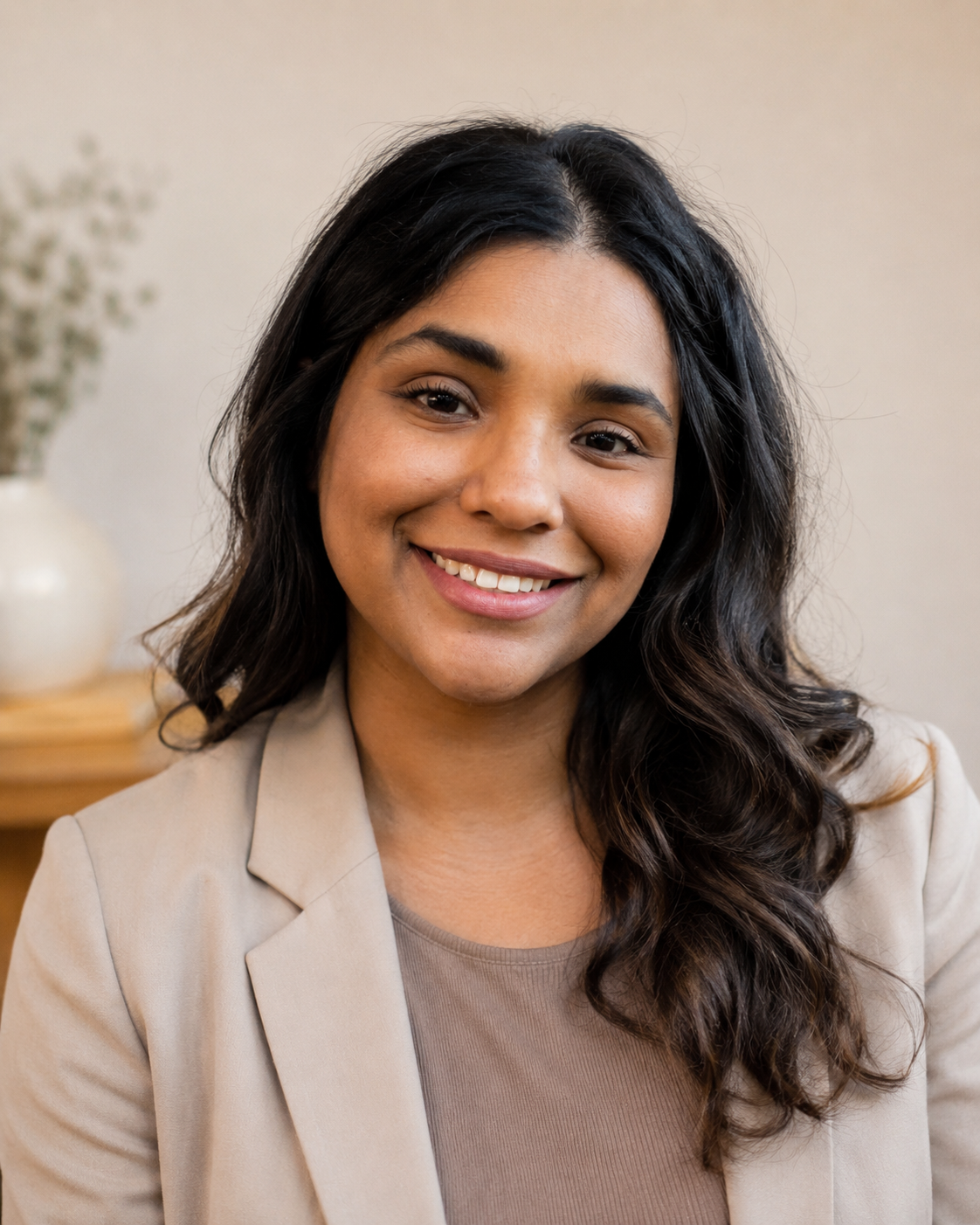
Hi, I’m Genesis!
Hello!MC
•
CCC
•
English & Spanish
•
Virtual Across Alberta
•
MC • CCC • English & Spanish • Virtual Across Alberta •
I’m Genesis, a Canadian Certified Counsellor with more than six years of experience supporting adults, youth, and families across community mental health, crisis support, domestic violence, and rural service settings.
Throughout my work, I have supported people navigating anxiety, trauma, burnout, emotional overwhelm, difficult relationship patterns, major life transitions, and the process of rebuilding after painful experiences. These experiences have shaped the way I practice, with compassion, curiosity, humility, and deep respect for the courage it takes to seek support.
I understand, both personally and professionally, that healing is rarely linear. It can feel frightening to face painful experiences, make changes, or ask for help when you are not even sure where to begin. You do not need to arrive with the right words or have everything figured out.
I also recognize that therapy is a commitment. It asks for your time, trust, emotional energy, and financial investment. My hope is to honour that commitment by showing up with care, honesty, preparation, and intention. Together, we can regularly reflect on what is helping, what may need to change, and whether our work continues to feel aligned with your needs and goals.
At Flor Counselling, I aim to create a space where you feel met with compassion, understanding, humility, and genuine care. My hope is that our work helps you understand yourself more deeply, reconnect with your voice, strengthen your relationship with yourself, and move toward a life that feels more grounded, meaningful, and aligned with who you are.
My Approach
My approach to therapy is integrative, which means I do not rely on just one therapy model or expect every person to fit into the same kind of treatment. Instead, I draw from different evidence-based and relational approaches depending on what you are experiencing, what feels most helpful, and what you want to work toward.
Some sessions may be more reflective and focused on understanding patterns, while others may include practical tools, coping strategies, psychoeducation, or deeper emotional work. Throughout the process, I aim to keep therapy collaborative, flexible, and grounded in your goals, experiences, culture, strengths, and needs.
-
I approach therapy with the understanding that what we have been through can shape how we respond to stress, relationships, emotions, and even how we see ourselves. For me, trauma-informed care means creating a space where you do not have to rush, perform, or have everything figured out. We move at a pace that feels manageable, with emotional safety, trust, and collaboration at the centre of the work.
Client-centred therapy means your voice matters here. Your experiences, values, goals, culture, and perspective help guide our work together. I want you to feel comfortable showing up as your full, authentic self without feeling judged or pressured to fit into a certain way of doing therapy. I bring clinical knowledge, tools, and support, but you bring something just as important: your lived experience and understanding of your own life.
My hope is that therapy feels less like being “analyzed” and more like having someone alongside you who is genuinely listening, helping you make sense of what you are carrying, and supporting you as you find a way forward that feels right for you.
-
ACT can help when difficult thoughts, emotions, or experiences begin to take up so much space that they pull you away from the life you want to be living.
Rather than trying to eliminate every uncomfortable thought or feeling, ACT focuses on changing how you relate to them. Together, we may work on increasing emotional awareness, creating space from unhelpful thought patterns, identifying what truly matters to you, and taking meaningful steps toward those values even when discomfort is present.
-
CBT explores the relationship between thoughts, emotions, and behaviours. It can be helpful when certain thinking patterns, beliefs, or habits are contributing to anxiety, self-doubt, avoidance, overwhelm, or feeling stuck.
In sessions, we may explore patterns in how you interpret situations, identify beliefs that are no longer serving you, and develop more balanced and flexible ways of responding.
-
At times, insight alone is not enough. You may understand why something is happening and still need practical tools for getting through difficult moments.
I may incorporate DBT-informed skills to support emotional regulation, distress tolerance, mindfulness, communication, and interpersonal boundaries. These strategies can be particularly helpful when emotions feel intense, reactions happen quickly, or it is difficult to know what to do in the moment.
-
Our earliest and most significant relationships can influence how we learn to connect with others, respond to conflict, trust, set boundaries, and understand our own worth.
Through an attachment and relational lens, we may explore recurring relationship patterns, fears of rejection or abandonment, difficulty trusting others, people-pleasing, emotional distancing, or the ways past experiences continue to affect present-day relationships.
The goal is not to blame the past, but to understand patterns with greater clarity so you can make more intentional choices moving forward.
-
You are more than a diagnosis, a symptom, or a therapy model. What works well for one person may not feel right for someone else, and I do not believe therapy should be forced into a one-size-fits-all approach.
Depending on what you are going through, we may use different therapeutic approaches, practical tools, reflection, psychoeducation, or spend time exploring things at a deeper level. I take into account your goals, experiences, culture, strengths, preferences, and what feels most important to you in the moment.
Therapy is something we shape together. If something is not feeling helpful, we can talk about it, adjust, and try a different direction. My goal is for you to feel comfortable having a voice in the process and for our work to feel like it fits you, not the other way around.
Credentials and Professional Background
I believe that choosing a therapist should include being able to understand and verify their professional qualifications
Master of Counselling (MC)
Master of Counselling — Counselling Psychology, Athabasca University
Canadian Certified Counsellor (CCC)
Canadian Counselling and Psychotherapy Association
The Canadian Certified Counsellor designation is granted to qualifying professional members whose graduate education and application meet CCPA’s certification requirements. CCCs are also accountable to the organization’s Code of Ethics and Standards of Practice.
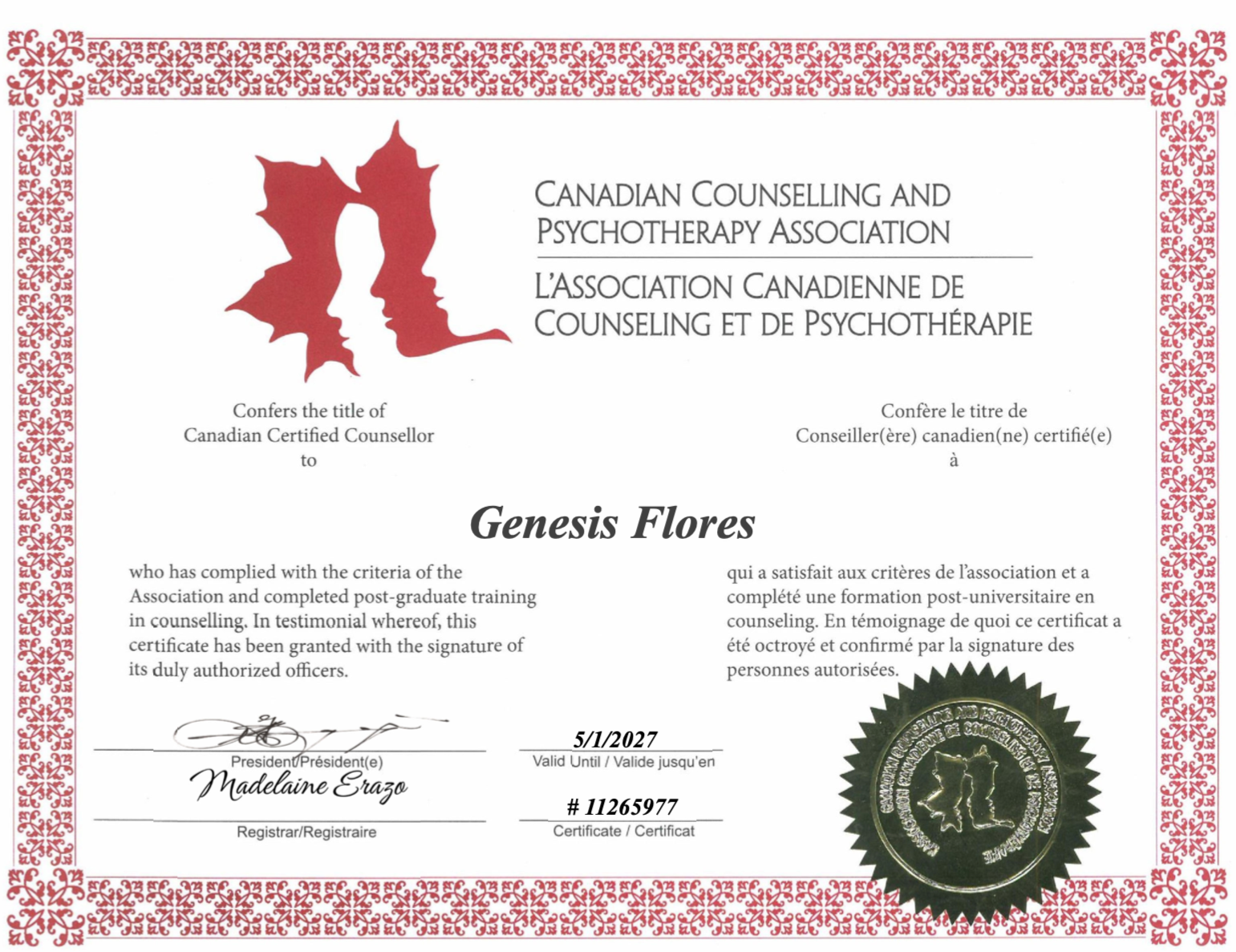
Verify Canadian Certified Counsellor Credentials: https://www.ccpa-accp.ca/find-a-ccc-ccc-s-directory/
Beyond the Therapy Room
Before opening Flor Counselling, much of my work took place outside a traditional therapy office. I worked alongside people navigating crisis, domestic violence, complicated systems and major life transitions. I have contributed to advocacy, public education, community panels, professional training, research and collaborative conversations about how services can respond more safely and compassionately.
My advocacy has included helping strengthen hospital responses to domestic violence, supporting more inclusive services for survivors of all genders and bringing attention to the ways culture, language, brain injury, isolation and systemic barriers can affect someone’s ability to access help. These experiences showed me how often people are expected to navigate overwhelming circumstances while also trying to prove that their experiences matter.
As a bilingual, first-generation Canadian with Latin American roots, I also understand that culture, family expectations, language and identity can influence how we understand mental health, relationships and asking for support. As a mother, I understand that caring for others can sometimes make it difficult to recognize your own needs, identity and emotional limits.
All of this has shaped the way I practice. I try to look beyond symptoms and consider the whole person, their relationships, culture, responsibilities, strengths, environment and the systems affecting their life. I care deeply about helping people feel heard, reclaim their voice and recognize that their responses often make sense within the context of what they have experienced.
If you would like to learn more about the advocacy, presentations, research and community initiatives that have informed my work, you can explore them below.
Let’s See Whether We Feel Like a Good Fit
A free 15-minute consultation gives you an opportunity to tell me briefly what you are looking for, ask questions and learn more about how we might work together. There is no expectation that you must book ongoing counselling afterward.